
If your child is an “angel” for their teachers but falls apart the moment they see you, it’s not bad parenting— it’s actually a sign they feel safe with you. This is called After-School Restraint Collapse, and here is how to handle it.
The Mystery of the “Dr. Jekyll and Mr. Hyde” Child
You pick your child up from school, and the teacher gives you a glowing report: “Siti was so helpful today!” or “Stanley followed every instruction.” You feel a momentary surge of relief—until you reach the car. Suddenly, the smallest trigger—the “wrong” snack or a simple “How was your day?”—unleashes a full-blown meltdown.
If your “good” student turns into a “monster” the moment they see you, you aren’t alone. Furthermore, it isn’t a sign of bad parenting. On the contrary, it is a powerful indicator that you are your child’s safest person. This phenomenon is known as After-School Restraint Collapse.
Why does the “good” student turn into a “monster” at home?
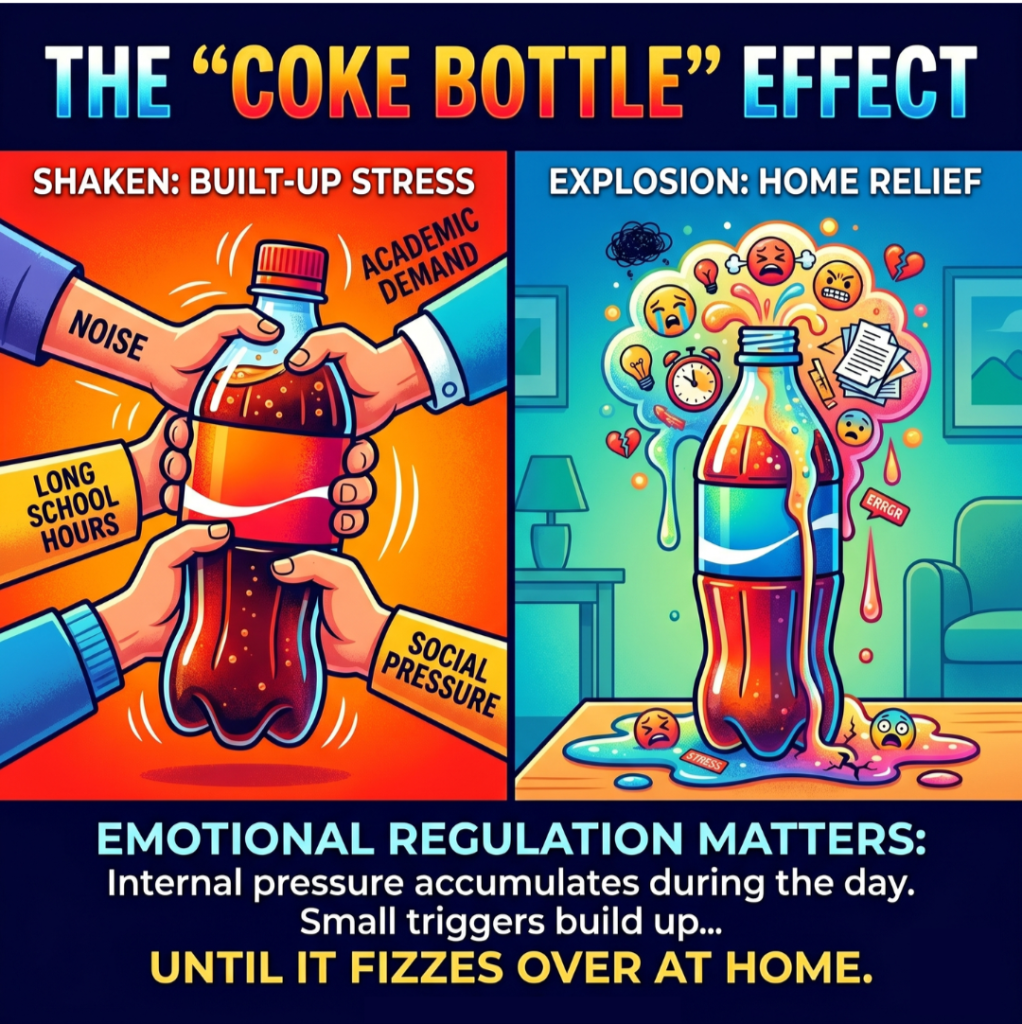
The Science: The “Coke Bottle” Effect
To understand this collapse, imagine your child is a bottle of Coca-Cola. Throughout the day, they face constant “shakes”:
- Emotional Labor: Sitting still when their body craves movement.
- Sensory Overload: Navigating a loud, chaotic canteen or bright classroom.
- Social Friction: Managing complex interactions with peers.
- High Expectations: Meeting the intense academic pressures of the school system.
By 4:00 PM, that bottle has been shaken a hundred times. The lid is held on by sheer willpower. However, when they see you, the pressure is finally released. The resulting “explosion” isn’t defiance; it is a vital release of pent-up energy they’ve held in all day just to “fit in” and be “good”.
Why It Happens to Your Child?
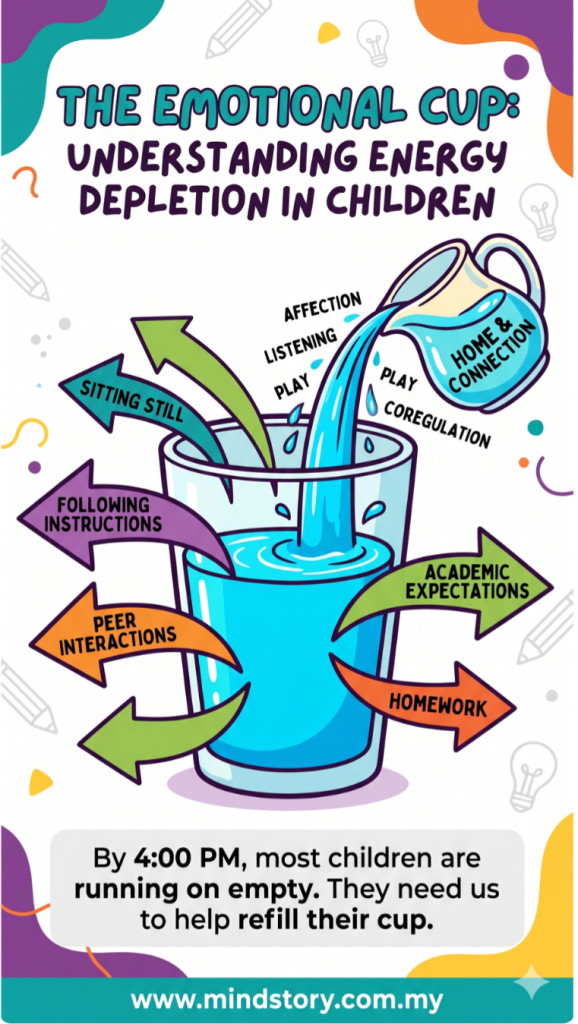
Our local students often endure grueling schedules, starting as early as 7:30 or 8:00 AM, followed by transit, tuition or extracurricular. For a child with sensory processing needs or learning challenges, this is equivalent to running a marathon in shoes that are three sizes too small. Consequently, by the time they reach home, their “Emotional Cup” is bone dry.
The Quick Win: The “15-Minute Buffer”
The best way to prevent the collapse is to bridge the gap between “School Self” and “Home Self.”
- Skip the Interrogation: Avoid “How was school?” or “Did you finish your spelling?” for the first 15 minutes.
- The Sensory Reset: Provide a “crunchy or chewy” snack (which is regulating for the jaw) and a cold drink.
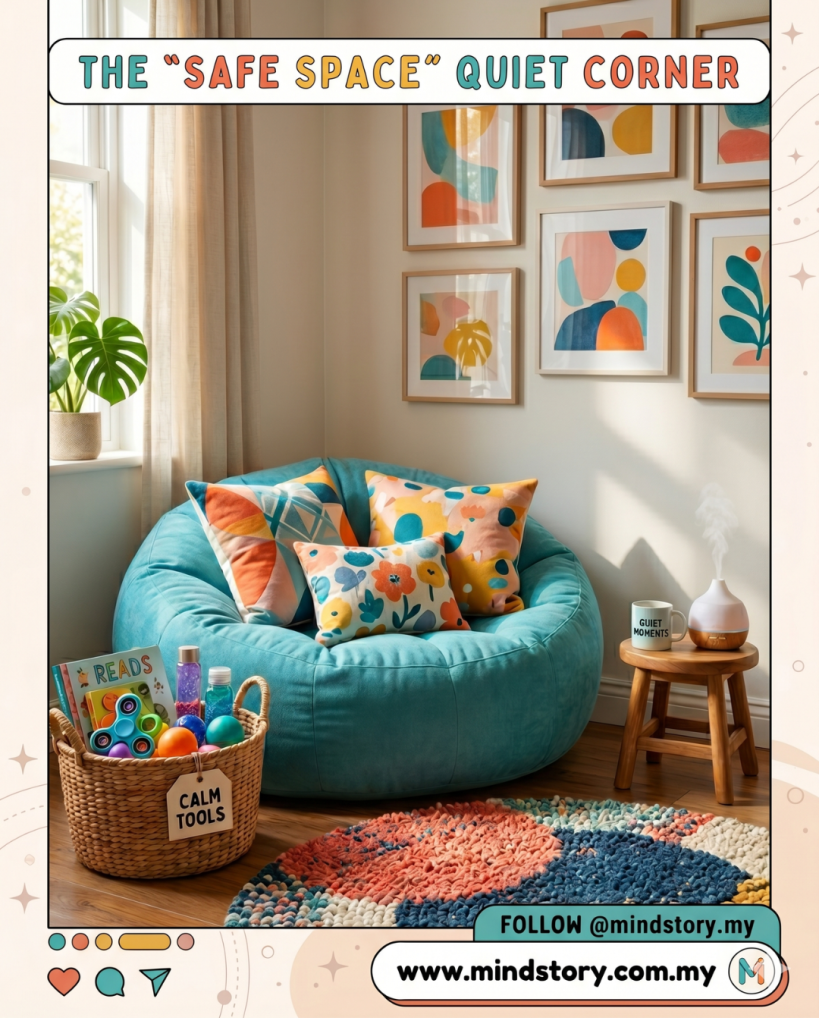
- Low Input: Dim the lights, turn off the radio in the car, and let them be in a “low-demand” zone.
The Takeaway for Parents
If your child saves their biggest meltdowns for you, take a deep breath and remember: It is because you are their safe base. They don’t have to “perform” for you. They can finally be their tired, overwhelmed selves.
Looking for more ways to understand your child’s emotional world? > Check out our previous post on Is your child feeling safe? From Maslow’s Hierarchy perspective to learn more about the importance of emotional security.