Turning the Wait into a Win: How to Support Your Child Today.
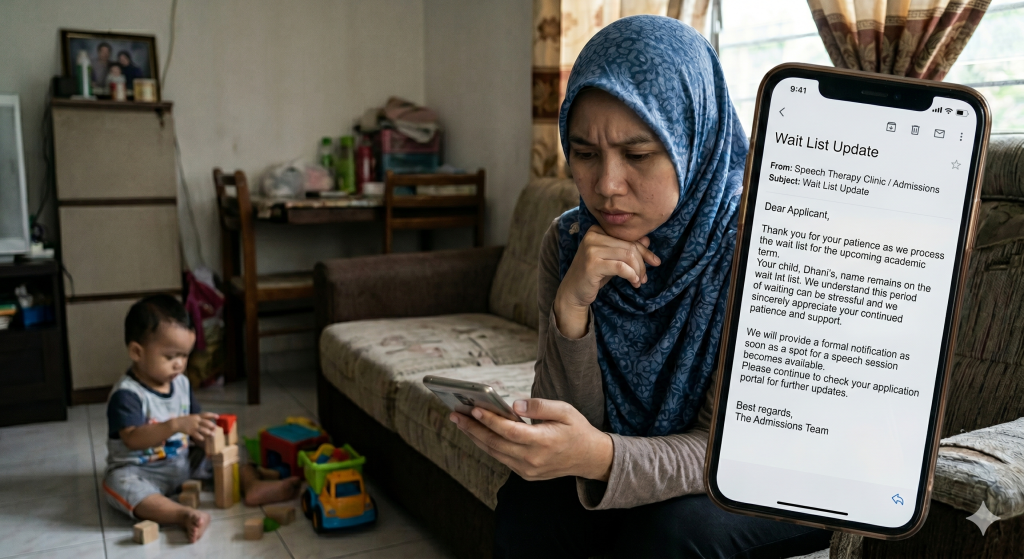
The Speech Therapy Waitlist Survival Guide: Supporting Your Child Today
Finding out your child needs extra support is a brave first step for any parent. However, that step often leads to a very long waiting room. Due to the current shortage of clinical professionals or Speech Therapists, many families face months of uncertainty. Specifically, this period can feel like lost time. Yet, your child’s development does not have to pause just because a clinic schedule is full.
You are your child’s first therapist and most consistent advocate. Consequently, the small shifts you make in your daily rhythm today will create the foundation your future therapist will build upon tomorrow.
The Magic of “Narrating”
One powerful tool in your arsenal is simple narration. Instead of quizzing your child with “What’s this?” or “Say apple,” try becoming a sportscaster for their life. Furthermore, by describing what they see and do—”You’re holding a blue cube!”—you provide a rich language model. This removes the pressure to perform. Most importantly, it preserves their dignity and keeps communication a joy rather than a chore.

Simple Tools at Home while in the Waitlist
You don’t need special medical toys to see progress. Your home is already full of excellent tools for communication.
- Bubbles: Great for practicing the lip rounding needed for many sounds.
- Cardboard Boxes: Encourage imaginative play—maybe a box is a cave, a bus, or a rocket ship.
- A Mirror: Sitting and making faces together helps them see how sounds are physically formed.
- Everyday Routines: Talk about what you are doing during bath time, mealtime, and while getting dressed.
These simple moments are rich opportunities for learning.

The Takeaway: 5-Second Pause
If you try only one new technique today, let it be this: The 5-Second Pause.
After you ask a question or make a comment, stop. Wait five full seconds before speaking again. It can feel like a long time, but it is crucial. Many children with language delays simply need more time to process what they heard and find the words to respond. The pause gives them the space to succeed.
Need more ideas? Check them out on our earlier post Here are what you can do while you look for speech therapist or ASHA’s How Parents Can Help Children With Speech and Language Disorders in Virtual and Modified In-Person Classroom Settings