
The Executive Function “Glitch”: When Schoolwork Refusal is Actually Working Memory Overload
“Dia malas lah, he just won’t copy down the homework.” We hear this phrase often in school corridors and living rooms across Malaysia. Consequently, well-meaning parents feel intense frustration when the school bag comes home completely empty. However, what if your child literally cannot hold that multi-step instruction in their head?
Schoolwork refusal is rarely an act of defiance. Instead, it is often an executive functioning glitch where instructions evaporate before execution. When a child stares blankly at a textbook, they are usually experiencing working memory overload.

The “Malas” Label vs. Cognitive Fatigue
Specifically, we need to re-examine the labels we use. When we call a child lazy, we miss the hidden exhaustion underneath their silence. The human brain manages Brain Traffic Control through executive functioning skills. These skills act like a short-term mental scratchpad.
If a child has a smaller mental workspace, they drop information quickly. Therefore, forcing them to sit for hours does not help. Because their brains work twice as hard to process simple steps, cognitive fatigue sets in very early. They feel completely drained before they even touch a pencil to the paper.
Why Whiteboards Cause Working Memory Overload
Copying long sentences from the whiteboard in standard, fast-paced primary school environments is incredibly demanding. First, the child must look up, read the words, and hold that exact phrase in their mind. Next, they must look down, find their place on the paper, and coordinate their hand muscles to write.
During this split second, working memory overload strikes. The words simply vanish from their thoughts. Naturally, a child who experiences this repeated failure will choose to stop trying entirely. They do this simply to protect their own dignity from constant frustration.
Is It a Behavioral Issue or Working Memory Overload?
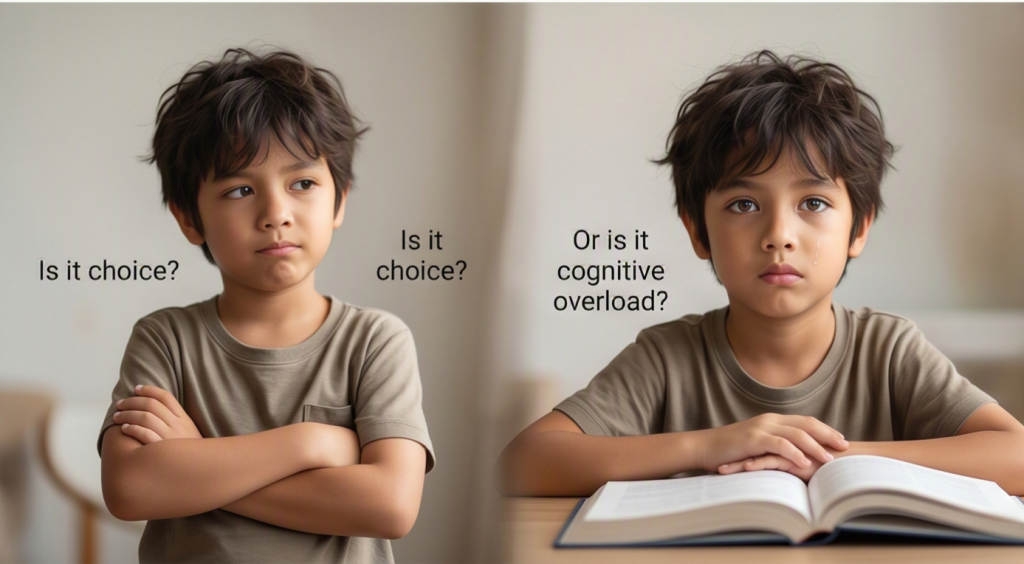
Parents often ask how to tell the difference between true behavioral defiance and a genuine cognitive freeze. Fortunately, you can look for subtle clues in their daily patterns to understand what is happening.
| Clue | Behavioral Defiance | Working Memory Overload |
| The Trigger | Happens mostly with tasks they dislike, even simple ones. | Happens when tasks involve three or more steps at once. |
| The Reaction | Active arguments, bargaining, or emotional negotiation. | Silent staring, sudden zoning out, or quick tears of frustration. |
| Other Settings | They remember rules easily during video games or play. | They forget verbal instructions even during fun activities. |
Practical Scaffolding Steps for Parents
Fortunately, you can rebuild your child’s confidence at home. You can transform your study space into a safe harbor by changing how you give directions. You can help them learn at their own pace without extra stress.
- Shrink the Steps: Instead of giving three instructions at once, deliver only one.
- Visualize the Work: Break multi-step instructions into single, visual sticky notes on their study desk.
- Celebrate the Effort: Focus on the energy they spent trying, rather than the final grade.
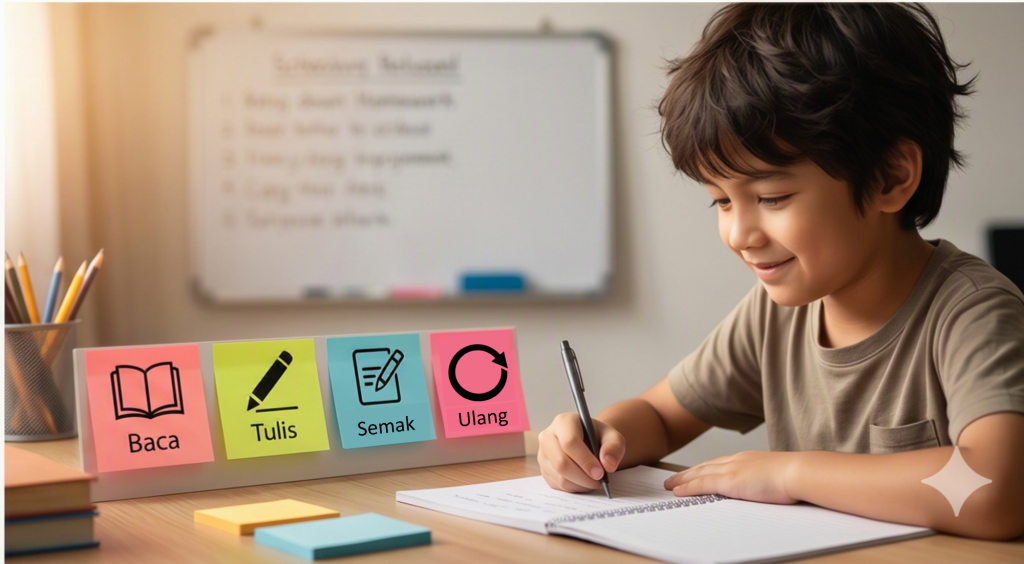
By replacing judgment with scaffolding, we help our children breathe easy again. They are not refusing to work; they are simply waiting for us to lighten the cognitive load. Read more on Executive Functioning Skills at Why “Trying Harder” Is Failing Your Child: The Truth About Executive Functioning Skills
Read more on Understood.org on What is working memory?