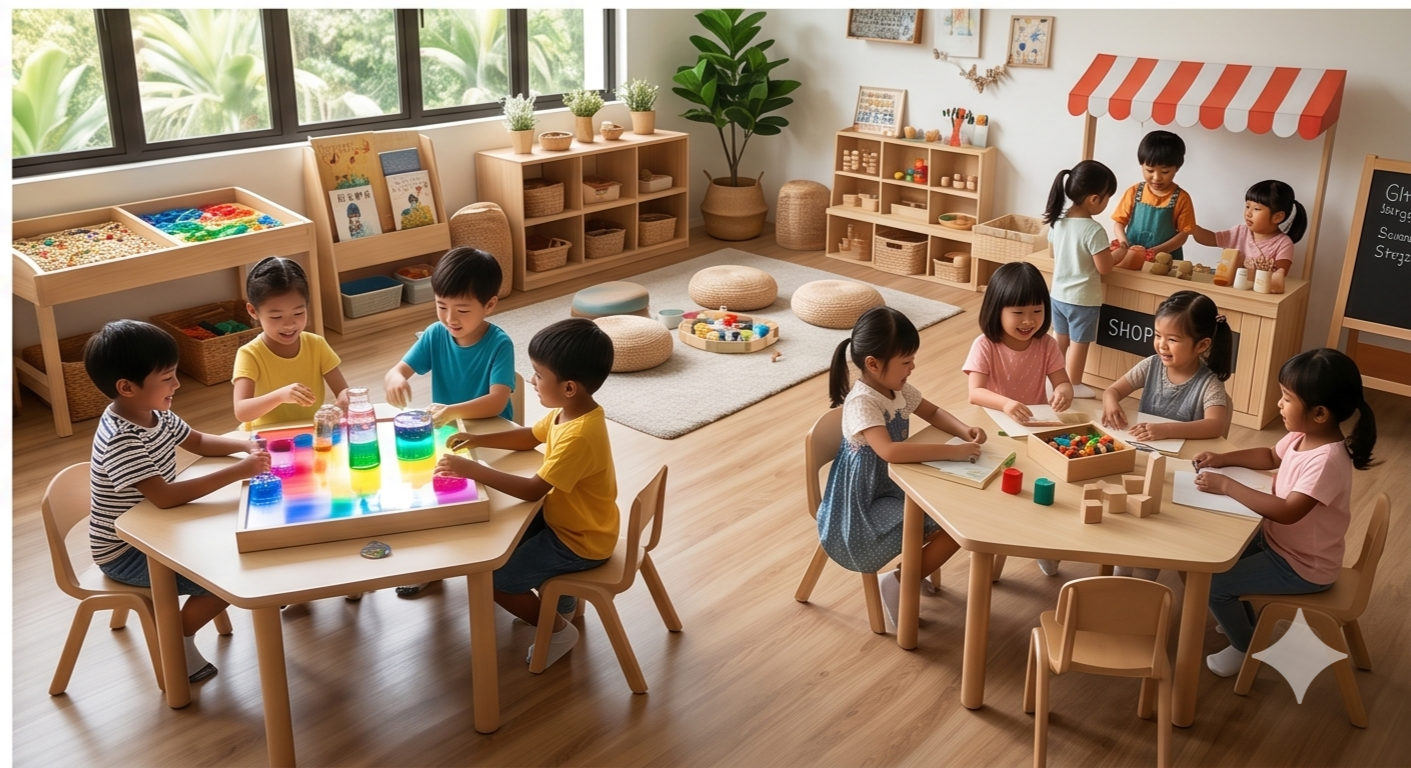
“Sit properly.” “Pay attention.” “Stop fidgeting.”
Every single day, teachers enter their classrooms with a mountain of lesson plans to execute and a diverse room of learners to guide. Specifically, managing a high-energy environment while trying to keep every student anchored to their desks can feel like an uphill battle. Consequently, relying entirely on traditional compliance methods like “sit up straight” or “stop fidgeting” often leaves educators feeling drained and physically exhausted by dismissal time.
But what if the daily struggle to maintain stillness isn’t a behavioral discipline issue at all? Instead, what if it is simply a sign that our physical environments need to evolve alongside our students’ learning styles?
Understanding the “Why” Behind the Movement
When a child constantly stands up or shifts in their chair, they are usually not trying to disrupt your teaching flow. Rather, it is often an automatic physiological response to an underlying neurological need for sensory input. For instance, a student navigating attention or high sensory drives actually requires subtle physical movement just to keep their brain alert, active, and capable of processing your instructions.
Furthermore, forcing a highly active student to remain completely immobile drains their limited mental energy. As a result, they exhaust all their concentration on trying to stay still, leaving absolutely no cognitive bandwidth to absorb the actual lesson you are delivering.
To counter this, modern educators must implement intentional, stress-free classroom inclusion strategies. For example, incorporating subtle fidget tools, scheduled sensory movement breaks, and flexible seating arrangements can entirely transform an overwhelming room into a structured, highly productive space for growth.
By implementing structured, low-maintenance classroom inclusion strategies, you can work with their biology rather than against it. For example, introducing discreet fidget tools, scheduled brain breaks, and flexible seating parameters can instantly transform a chaotic room dynamic into an organized, high-focus learning environment.
Realistic Solutions for a Simplified Classroom Routine
Implementing inclusive adjustments should never add more administrative weight or long hours to an already packed teaching schedule. Unfortunately, many theoretical clinical models demand complex, hyper-individualized lesson plans that simply do not work in a real, busy room. We strongly prioritize your professional sustainability and work-life balance; therefore, our strategies focus exclusively on small, sustainable environmental tweaks that fit right into your current teaching flow.
Specifically, effective classroom inclusion strategies focus on altering the environment rather than trying to change a student’s fundamental nature. When you make these minor structural shifts, you minimize constant behavioral disruptions. Simultaneously, this targeted support reduces your daily stress levels, preserves your vocal stamina, and allows you to focus on what you love most: teaching.
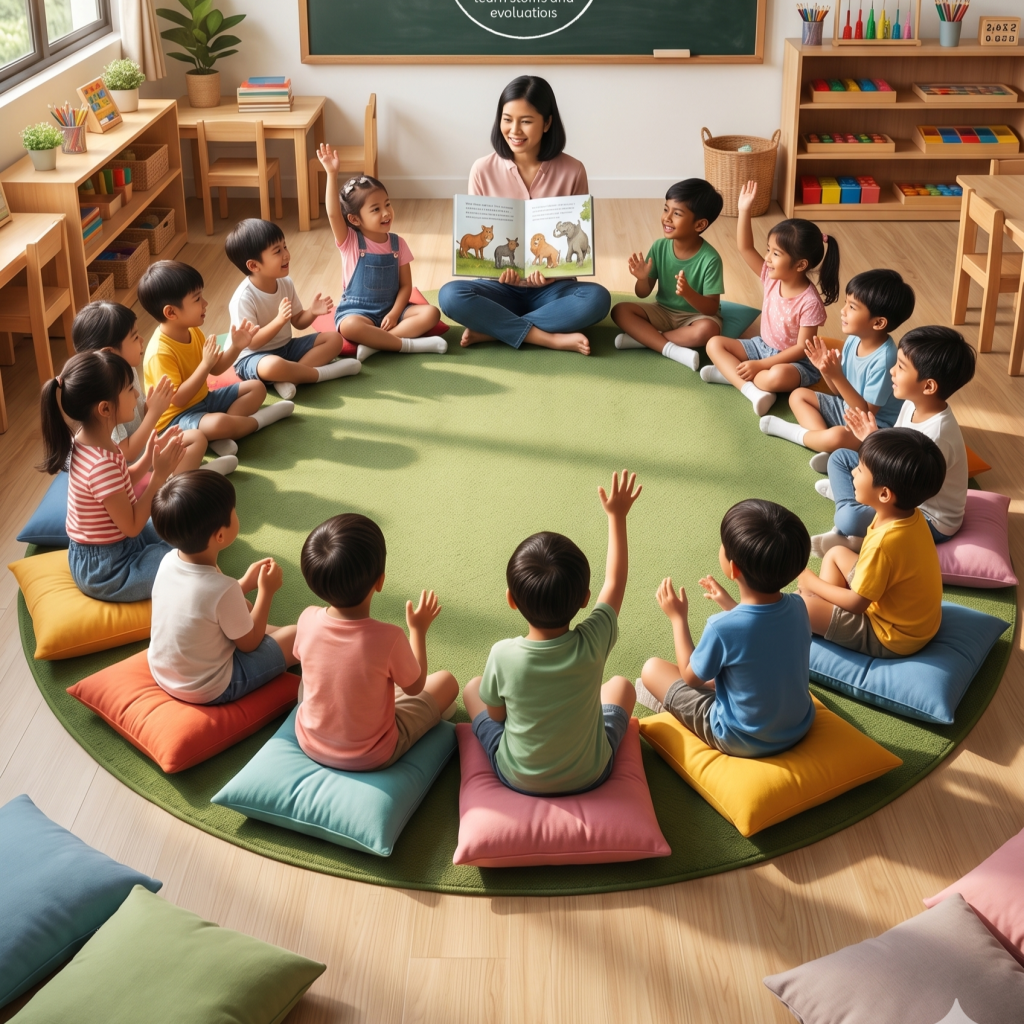
Join Our In-Person Interactive Training Session
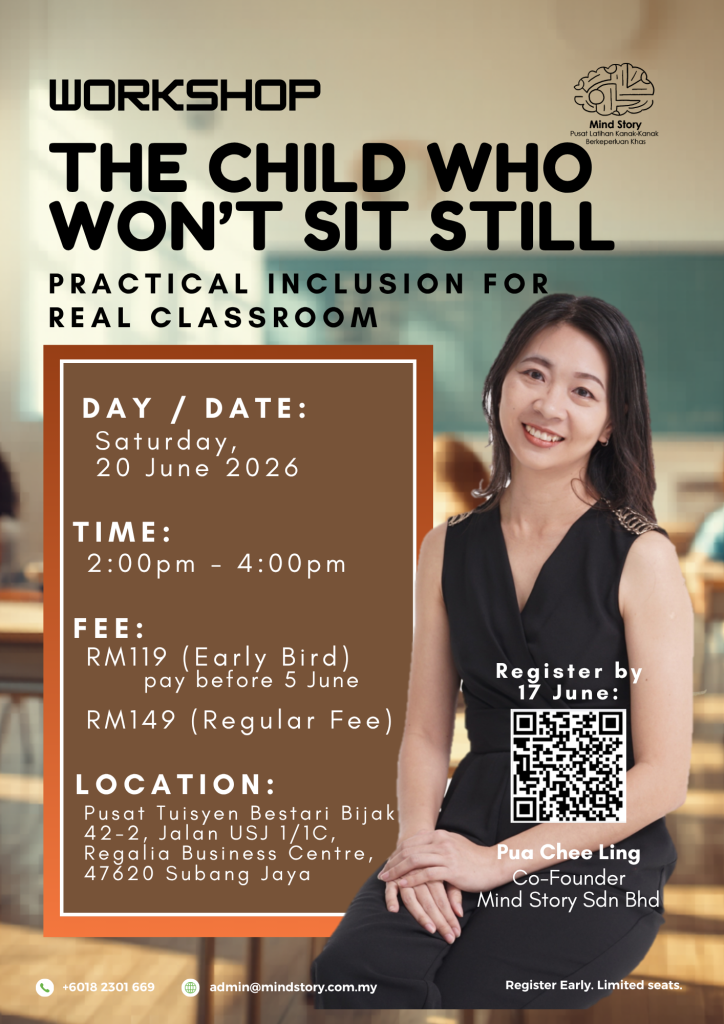
Moving from theory to practice can be challenging in a room full of thirty unique students. To give you the exact blueprints you need, Mind Story is hosting a highly practical, interactive workshop designed explicitly for educators, preschool teachers, and supportive caregivers.
- Speaker: Pua Chee Ling
- Workshop Title: The Child Who Won’t Sit Still – Practical Inclusion for Real Classroom
- Day / Date: Saturday, 20 June 2026
- Time: 2:00pm – 4:00pm
- Location Venue: Pusat Tuisyen Bestari Bijak, 42-2, Jalan USJ 1/1C, Regalia Business Centre, 47620 Subang Jaya
- Your Investment: Regular Fee: RM149
- Registration Deadline: Register by Wednesday, 17 June 2026
Please note: Seats are strictly limited to ensure personal case guidance and practical troubleshooting for every teacher. Register early to claim your spot!
Read more on strategies how gross motor activity facilitates executive working memory performance at Sage Journals